Uniform convergence in probability is a form of convergence in probability in statistical asymptotic theory and probability theory. It means that, under certain conditions, the empirical frequencies of all events in a certain event-family uniformly converge to their theoretical probabilities. Uniform convergence in probability has applications to statistics as well as machine learning as part of statistical learning theory. Specifically, the Glivenko-Cantelli theorem and the homonymous classes of functions are fundamentally related to uniform convergence. The law of large numbers says that, for each single event A {\displaystyle A} , its empirical frequency in a sequence of independent trials converges (with high probability) to its theoretical probability. In many application however, the need arises to judge simultaneously the probabilities of events of an entire class S {\displaystyle S} from one and the same sample. Moreover, it, is required that the relative frequency of the events converge to the probability uniformly over the entire class of events S {\displaystyle S} . The Uniform Convergence Theorem gives a sufficient condition for this convergence to hold. Roughly, if the event-family is sufficiently simple (its VC dimension is sufficiently small) then uniform convergence holds. == Definitions == For a class of predicates H {\displaystyle H} defined on a set X {\displaystyle X} and a set of samples x = ( x 1 , x 2 , … , x m ) {\displaystyle x=(x_{1},x_{2},\dots ,x_{m})} , where x i ∈ X {\displaystyle x_{i}\in X} , the empirical frequency of h ∈ H {\displaystyle h\in H} on x {\displaystyle x} is Q ^ x ( h ) = 1 m | { i : 1 ≤ i ≤ m , h ( x i ) = 1 } | . {\displaystyle {\widehat {Q}}_{x}(h)={\frac {1}{m}}|\{i:1\leq i\leq m,h(x_{i})=1\}|.} The theoretical probability of h ∈ H {\displaystyle h\in H} is defined as Q P ( h ) = P { y ∈ X : h ( y ) = 1 } . {\displaystyle Q_{P}(h)=P\{y\in X:h(y)=1\}.} The Uniform Convergence Theorem states, roughly, that if H {\displaystyle H} is "simple" and we draw samples independently (with replacement) from X {\displaystyle X} according to any distribution P {\displaystyle P} , then with high probability, the empirical frequency will be close to its expected value, which is the theoretical probability. Here "simple" means that the Vapnik–Chervonenkis dimension of the class H {\displaystyle H} is small relative to the size of the sample. In other words, a sufficiently simple collection of functions behaves roughly the same on a small random sample as it does on the distribution as a whole. The Uniform Convergence Theorem was first proved by Vapnik and Chervonenkis using the concept of growth function. == Uniform Convergence Theorem == The statement of the Uniform Convergence Theorem is as follows: If H {\displaystyle H} is a set of { 0 , 1 } {\displaystyle \{0,1\}} -valued functions defined on a set X {\displaystyle X} and P {\displaystyle P} is a probability distribution on X {\displaystyle X} then for ε > 0 {\displaystyle \varepsilon >0} and m {\displaystyle m} a positive integer, we have: P m { | Q P ( h ) − Q x ^ ( h ) | ≥ ε for some h ∈ H } ≤ 4 Π H ( 2 m ) e − ε 2 m / 8 . {\displaystyle P^{m}\{|Q_{P}(h)-{\widehat {Q_{x}}}(h)|\geq \varepsilon {\text{ for some }}h\in H\}\leq 4\Pi _{H}(2m)e^{-\varepsilon ^{2}m/8}.} In the above, for any x ∈ X m , {\displaystyle x\in X^{m},} Q P ( h ) = P { ( y ∈ X : h ( y ) = 1 } , {\displaystyle Q_{P}(h)=P\{(y\in X:h(y)=1\},} Q ^ x ( h ) = 1 m | { i : 1 ≤ i ≤ m , h ( x i ) = 1 } | {\displaystyle {\widehat {Q}}_{x}(h)={\frac {1}{m}}|\{i:1\leq i\leq m,h(x_{i})=1\}|} and | x | = m . {\displaystyle |x|=m.} P m {\displaystyle P^{m}} indicates that the probability is taken over x {\displaystyle x} consisting of m {\displaystyle m} i.i.d. draws from the distribution P . {\displaystyle P.} Finally, the growth function Π H {\displaystyle \Pi _{H}} is defined in the following way, for any { 0 , 1 } {\displaystyle \{0,1\}} -valued functions H {\displaystyle H} over X {\displaystyle X} and for any natural number m {\displaystyle m} : Π H ( m ) = max | { h ∩ D : D ⊆ X , | D | = m , h ∈ H } | . {\displaystyle \Pi _{H}(m)=\max |\{h\cap D:D\subseteq X,|D|=m,h\in H\}|.} From the point of view of Learning Theory one can consider H {\displaystyle H} to be the Concept/Hypothesis class defined over the instance set X {\displaystyle X} . Crucially, the Sauer–Shelah lemma implies that Π H ( m ) ≤ m d {\displaystyle \Pi _{H}(m)\leq m^{d}} , where d {\displaystyle d} is the VC dimension of H {\displaystyle H} . == Proof of the Uniform Convergence Theorem == and are the sources of the proof below. Before we get into the details of the proof of the Uniform Convergence Theorem we will present a high level overview of the proof. Symmetrization: We transform the problem of analyzing | Q P ( h ) − Q ^ x ( h ) | ≥ ε {\displaystyle |Q_{P}(h)-{\widehat {Q}}_{x}(h)|\geq \varepsilon } into the problem of analyzing | Q ^ r ( h ) − Q ^ s ( h ) | ≥ ε / 2 {\displaystyle |{\widehat {Q}}_{r}(h)-{\widehat {Q}}_{s}(h)|\geq \varepsilon /2} , where r {\displaystyle r} and s {\displaystyle s} are i.i.d samples of size m {\displaystyle m} drawn according to the distribution P {\displaystyle P} . One can view r {\displaystyle r} as the original randomly drawn sample of length m {\displaystyle m} , while s {\displaystyle s} may be thought as the testing sample which is used to estimate Q P ( h ) {\displaystyle Q_{P}(h)} . Permutation: Since r {\displaystyle r} and s {\displaystyle s} are picked identically and independently, so swapping elements between them will not change the probability distribution on r {\displaystyle r} and s {\displaystyle s} . So, we will try to bound the probability of | Q ^ r ( h ) − Q ^ s ( h ) | ≥ ε / 2 {\displaystyle |{\widehat {Q}}_{r}(h)-{\widehat {Q}}_{s}(h)|\geq \varepsilon /2} for some h ∈ H {\displaystyle h\in H} by considering the effect of a specific collection of permutations of the joint sample x = r | | s {\displaystyle x=r||s} . Specifically, we consider permutations σ ( x ) {\displaystyle \sigma (x)} which swap x i {\displaystyle x_{i}} and x m + i {\displaystyle x_{m+i}} in some subset of 1 , 2 , . . . , m {\displaystyle {1,2,...,m}} . The symbol r | | s {\displaystyle r||s} means the concatenation of r {\displaystyle r} and s {\displaystyle s} . Reduction to a finite class: We can now restrict the function class H {\displaystyle H} to a fixed joint sample and hence, if H {\displaystyle H} has finite VC Dimension, it reduces to the problem to one involving a finite function class. We present the technical details of the proof. It should be stressed that this proof glosses over details like the measurability of the events V {\displaystyle V} and R {\displaystyle R} ; measurability is granted in the case of H {\displaystyle H} being finite or countable, but this is not normally the case in standard applications of the theorem (e.g. for statistical learning theory or to prove the Glivenko-Cantelli theorem). To get measurability, one needs to use a notion of separability of the underlying space, possibly related to H {\displaystyle H} . === Symmetrization === Lemma: Let V = { x ∈ X m : | Q P ( h ) − Q ^ x ( h ) | ≥ ε for some h ∈ H } {\displaystyle V=\{x\in X^{m}:|Q_{P}(h)-{\widehat {Q}}_{x}(h)|\geq \varepsilon {\text{ for some }}h\in H\}} and R = { ( r , s ) ∈ X m × X m : | Q r ^ ( h ) − Q ^ s ( h ) | ≥ ε / 2 for some h ∈ H } . {\displaystyle R=\{(r,s)\in X^{m}\times X^{m}:|{\widehat {Q_{r}}}(h)-{\widehat {Q}}_{s}(h)|\geq \varepsilon /2{\text{ for some }}h\in H\}.} Then for m ≥ 2 ε 2 {\displaystyle m\geq {\frac {2}{\varepsilon ^{2}}}} , P m ( V ) ≤ 2 P 2 m ( R ) {\displaystyle P^{m}(V)\leq 2P^{2m}(R)} . Proof: By the triangle inequality, if | Q P ( h ) − Q ^ r ( h ) | ≥ ε {\displaystyle |Q_{P}(h)-{\widehat {Q}}_{r}(h)|\geq \varepsilon } and | Q P ( h ) − Q ^ s ( h ) | ≤ ε / 2 {\displaystyle |Q_{P}(h)-{\widehat {Q}}_{s}(h)|\leq \varepsilon /2} then | Q ^ r ( h ) − Q ^ s ( h ) | ≥ ε / 2 {\displaystyle |{\widehat {Q}}_{r}(h)-{\widehat {Q}}_{s}(h)|\geq \varepsilon /2} . Therefore, P 2 m ( R ) ≥ P 2 m { ∃ h ∈ H , | Q P ( h ) − Q ^ r ( h ) | ≥ ε and | Q P ( h ) − Q ^ s ( h ) | ≤ ε / 2 } = ∫ V P m { s : ∃ h ∈ H , | Q P ( h ) − Q ^ r ( h ) | ≥ ε and | Q P ( h ) − Q ^ s ( h ) | ≤ ε / 2 } d P m ( r ) = A {\displaystyle {\begin{aligned}&P^{2m}(R)\\[5pt]\geq {}&P^{2m}\{\exists h\in H,|Q_{P}(h)-{\widehat {Q}}_{r}(h)|\geq \varepsilon {\text{ and }}|Q_{P}(h)-{\widehat {Q}}_{s}(h)|\leq \varepsilon /2\}\\[5pt]={}&\int _{V}P^{m}\{s:\exists h\in H,|Q_{P}(h)-{\widehat {Q}}_{r}(h)|\geq \varepsilon {\text{ and }}|Q_{P}(h)-{\widehat {Q}}_{s}(h)|\leq \varepsilon /2\}\,dP^{m}(r)\\[5pt]={}&A\end{aligned}}} since r {\displaystyle r} and s {\displaystyle s} are independent. Now for r ∈ V {\displaystyle r\in V} fix an h ∈ H {\displaystyle h\in H} such that | Q P ( h ) − Q ^ r ( h ) | ≥ ε {\displaystyle |Q_{P}(h)-{\widehat {Q}}_{r}(h)|\geq \varepsilon } . For this h {\displaystyle h} , we shall
Singularity studies
Singularity studies is an interdisciplinary academic field which examines the idea of technological singularity — the hypothesised point at which artificial intelligence may surpass human intelligence, might be attained by artificial intelligence (AI), robotics, and other technologies and sciences, and its social impacts. In this academic field, the study and research are conducted across a broad array of terrains such as information science, robotics, social informatics, economics, philosophy, and ethics. The primary aim of singularity studies is to gain an integrative understanding of the transformation of social systems occurring in tandem with the explosive evolution of AI and also the changes to be effected by such transformation in the view of humans, ethics, and legal systems. == History == An academic work on technological singurality has appeared in computer science, philosophy, sociology, and law since the early 1990s. Early discussions of an intelligence explosion were popularised by science-fiction writer Vernor Vinge in 1993 and later systematised by futurist Ray Kurzweil. Since the 2010s, universities such as Oxford, Stanford, and Keio have established dedicated programmes, while peer-reviewed journals have begun to publish scenario analyses and policy studies. Ongoing debates question the predictive value of singularity scenarios and warn against a deterministic view of technology. == Characteristics of research == Singularity studies extends beyond mere future predictions and offer an intellectual foundation for proactively designing and creating a desirable future. Principal research themes in this realm include: Ethics of AI; Social implications of technologies; Possibility of harmonious coexistence of humans and AI; Communication with AI; and Redesign of social systems. == Technologists and academics == Vernor Vinge: Propounded the concept of singularity in 1993, making a massive impact on the academic and science-fiction spheres. Ray Kurzweil: Predicted the advent around 2045 of the technological singularity in his 2005 book The Singularity Is Near. Nick Bostrom: Offered philosophical reflections on superintelligence and the risks posed by AI. He is the founding director of the now-dissolved Future of Humanity Institute at the University of Oxford. === Japan === Kento Sasano: A social informatician, AI educator, and inventor. He is the president of the Japan Society of Singularity Studies. == Challenges and outlook == Singularity studies is still evolving as an academic field, and quite a few challenges remain unresolved in regard to the systematization of their theories, research methods, and educational curricula. That said, in this day and age of accelerating technological and societal shifts, interdisciplinary approaches have gained in importance and are drawing much attention in the arenas of scholarly research, intercorporate collaboration, and policy planning.
AI-assisted software development
AI-assisted software development is the use of artificial intelligence (AI) to augment software development. It uses large language models (LLMs), AI agents and other AI technologies to assist software developers. It helps in a range of tasks of the software development life cycle, from code generation to debugging, editing, testing, UI design, understanding the code, and documentation. Agentic coding denotes the use of AI agents for software development. == Technologies == === Source code generation === Large language models trained or fine-tuned on source-code corpora can generate source code from natural-language descriptions, comments, or docstrings. Research on code-generation systems often evaluates generated programs by functional correctness, such as whether the output passes automated test cases, rather than by syntax alone. Such tools can be features or extensions of integrated development environments (IDEs). === Intelligent code completion === AI agents using pre-trained and fine-tuned LLMs can predict and suggest code completions based on context. According to Husein, Aburajouh & Catal in a 2025 literature review in Computer Standards & Interfaces, "LLMs significantly enhance code completion performance across several programming languages and contexts, and their capability to predict relevant code snippets based on context and partial input boosts developer productivity substantially." === Testing, debugging, code review and analysis === AI is used to automatically generate test cases, identify potential bugs and security vulnerabilities, and suggest fixes. AI can also be used to perform static code analysis and suggest potential performance improvements. == Limitations == Both ownership of and responsibility for AI-generated code is disputed. According to a report from the German Federal Office for Information Security, the use of AI coding assistants without careful oversight from experienced developers can introduce both minor and major security vulnerabilities, and any potential gain in productivity should be weighed against the cost of additional quality control and security measures. According to Deloitte, outputs from AI-assisted software development must be validated through a combination of automated testing, static analysis tools and human review, creating a governance layer to improve quality and accountability. == Vibe coding ==
Personoid
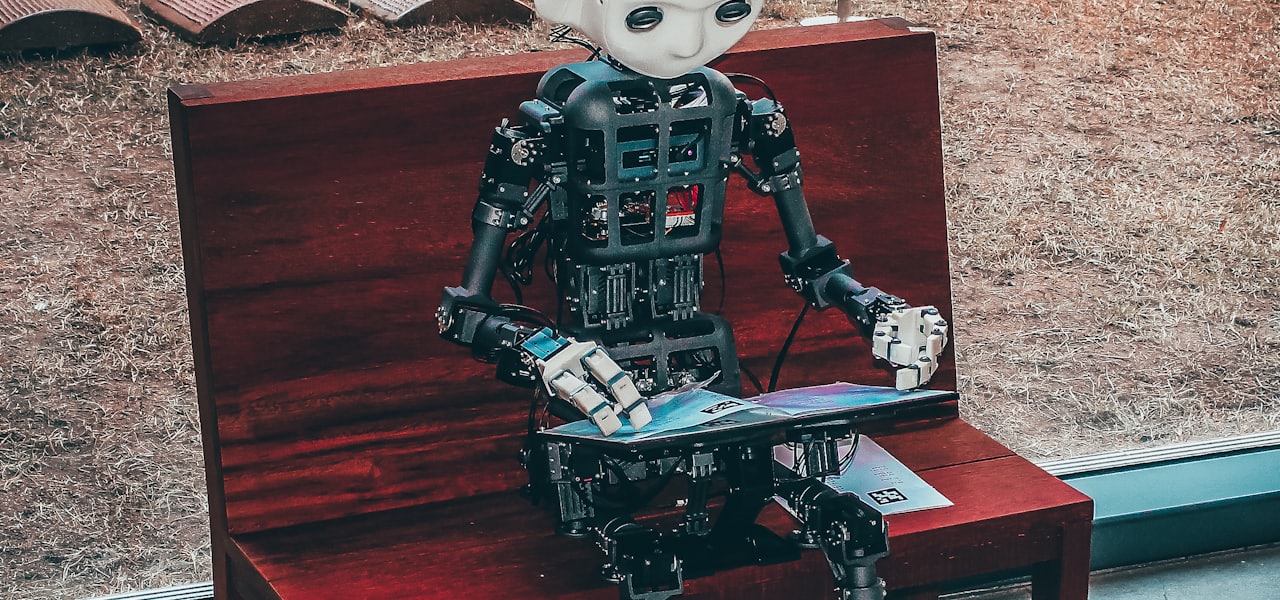
Personoid is the concept coined by Stanisław Lem, a Polish science-fiction writer, in Non Serviam, from his book A Perfect Vacuum (1971). His personoids are an abstraction of functions of human mind and they live in computers; they do not need any human-like physical body. In cognitive and software modeling, personoid is a research approach to the development of intelligent autonomous agents. In frame of the IPK (Information, Preferences, Knowledge) architecture, it is a framework of abstract intelligent agent with a cognitive and structural intelligence. It can be seen as an essence of high intelligent entities. From the philosophical and systemics perspectives, personoid societies can also be seen as the carriers of a culture. According to N. Gessler, the personoids study can be a base for the research on artificial culture and culture evolution. == Personoids on TV and cinema == Welt am Draht (1973) The Thirteenth Floor (1999)
EfficientNet
EfficientNet is a family of convolutional neural networks (CNNs) for computer vision published by researchers at Google AI in 2019. Its key innovation is compound scaling, which uniformly scales all dimensions of depth, width, and resolution using a single parameter. EfficientNet models have been adopted in various computer vision tasks, including image classification, object detection, and segmentation. == Compound scaling == EfficientNet introduces compound scaling, which, instead of scaling one dimension of the network at a time, such as depth (number of layers), width (number of channels), or resolution (input image size), uses a compound coefficient ϕ {\displaystyle \phi } to scale all three dimensions simultaneously. Specifically, given a baseline network, the depth, width, and resolution are scaled according to the following equations: depth multiplier: d = α ϕ width multiplier: w = β ϕ resolution multiplier: r = γ ϕ {\displaystyle {\begin{aligned}{\text{depth multiplier: }}d&=\alpha ^{\phi }\\{\text{width multiplier: }}w&=\beta ^{\phi }\\{\text{resolution multiplier: }}r&=\gamma ^{\phi }\end{aligned}}} subject to α ⋅ β 2 ⋅ γ 2 ≈ 2 {\displaystyle \alpha \cdot \beta ^{2}\cdot \gamma ^{2}\approx 2} and α ≥ 1 , β ≥ 1 , γ ≥ 1 {\displaystyle \alpha \geq 1,\beta \geq 1,\gamma \geq 1} . The α ⋅ β 2 ⋅ γ 2 ≈ 2 {\displaystyle \alpha \cdot \beta ^{2}\cdot \gamma ^{2}\approx 2} condition is such that increasing ϕ {\displaystyle \phi } by a factor of ϕ 0 {\displaystyle \phi _{0}} would increase the total FLOPs of running the network on an image approximately 2 ϕ 0 {\displaystyle 2^{\phi _{0}}} times. The hyperparameters α {\displaystyle \alpha } , β {\displaystyle \beta } , and γ {\displaystyle \gamma } are determined by a small grid search. The original paper suggested 1.2, 1.1, and 1.15, respectively. Architecturally, they optimized the choice of modules by neural architecture search (NAS), and found that the inverted bottleneck convolution (which they called MBConv) used in MobileNet worked well. The EfficientNet family is a stack of MBConv layers, with shapes determined by the compound scaling. The original publication consisted of 8 models, from EfficientNet-B0 to EfficientNet-B7, with increasing model size and accuracy. EfficientNet-B0 is the baseline network, and subsequent models are obtained by scaling the baseline network by increasing ϕ {\displaystyle \phi } . == Variants == EfficientNet has been adapted for fast inference on edge TPUs and centralized TPU or GPU clusters by NAS. EfficientNet V2 was published in June 2021. The architecture was improved by further NAS search with more types of convolutional layers. It also introduced a training method, which progressively increases image size during training, and uses regularization techniques like dropout, RandAugment, and Mixup. The authors claim this approach mitigates accuracy drops often associated with progressive resizing.
Neuro-symbolic AI
Neuro-symbolic AI is a subfield of artificial intelligence that integrates neural methods (e.g., neural networks and deep learning) with symbolic methods (e.g., formal logic, knowledge representation, and automated reasoning). The goal is to combine the strengths of both approaches, resulting in AI systems that can be trained from raw data and demonstrate robustness against outliers or errors in the base data, while preserving explainability, explicit use of expert knowledge, and explicit cognitive reasoning. As argued by Leslie Valiant and others, the effective construction of rich computational cognitive models demands the combination of symbolic reasoning and efficient machine learning. Gary Marcus argued, "We cannot construct rich cognitive models in an adequate, automated way without the triumvirate of hybrid architecture, rich prior knowledge, and sophisticated techniques for reasoning." Further, "To build a robust, knowledge-driven approach to AI we must have the machinery of symbol manipulation in our toolkit. Too much of useful knowledge is abstract to make do without tools that represent and manipulate abstraction, and to date, the only known machinery that can manipulate such abstract knowledge reliably is the apparatus of symbol manipulation." Angelo Dalli, Henry Kautz, Francesca Rossi, and Bart Selman also argued for such a synthesis. Their arguments attempt to address the two kinds of thinking, as discussed in Daniel Kahneman's book Thinking, Fast and Slow. It describes cognition as encompassing two components: System 1 is fast, reflexive, intuitive, and unconscious. System 2 is slower, step-by-step, and explicit. System 1 is used for pattern recognition. System 2 handles planning, deduction, and deliberative thinking. In this view, deep learning best handles the first kind of cognition, while symbolic reasoning best handles the second kind. Both are necessary for the development of a robust and reliable AI system capable of learning, reasoning, and interacting with humans to accept advice and answer questions. Since the 1990s, dual-process models with explicit references to the two contrasting systems have been the focus of research in both the fields of AI and cognitive science by numerous researchers. In 2025, the adoption of neurosymbolic AI, an approach that integrates neural networks with symbolic reasoning, increased in response to the need to address hallucination issues in large language models. For example, Amazon implemented Neurosymbolic AI in its Vulcan warehouse robots and Rufus shopping assistant to enhance accuracy and decision-making. == Approaches == Approaches for integration are diverse. Henry Kautz's taxonomy of neuro-symbolic architectures follows, along with some examples: Symbolic Neural symbolic is the current approach of many neural models in natural language processing, where words or subword tokens are the ultimate input and output of large language models. Examples include BERT, RoBERTa, and GPT-3. Symbolic[Neural] is exemplified by AlphaGo, where symbolic techniques are used to invoke neural techniques. In this case, the symbolic approach is Monte Carlo tree search and the neural techniques learn how to evaluate game positions. Neural | Symbolic uses a neural architecture to interpret perceptual data as symbols and relationships that are reasoned about symbolically. Neural-Concept Learner is an example. Neural: Symbolic → Neural relies on symbolic reasoning to generate or label training data that is subsequently learned by a deep learning model, e.g., to train a neural model for symbolic computation by using a Macsyma-like symbolic mathematics system to create or label examples. NeuralSymbolic uses a neural net that is generated from symbolic rules. An example is the Neural Theorem Prover, which constructs a neural network from an AND-OR proof tree generated from knowledge base rules and terms. Logic Tensor Networks also fall into this category. Neural[Symbolic] according to Kautz, this approach embeds true symbolic reasoning inside a neural network. These are tightly-coupled neural-symbolic systems, in which the logical inference rules are internal to the neural network. This way, the neural network internally computes the inference from the premises and learns to reason based on logical inference systems. Early work on connectionist modal and temporal logics by Garcez, Lamb, and Gabbay is aligned with this approach. These categories are not exhaustive, as they do not consider multi-agent systems. In 2005, Bader and Hitzler presented a more fine-grained categorization that took into account, e.g., whether the use of symbols included logic and, if so, whether the logic was propositional or first-order logic. The 2005 categorization and Kautz's taxonomy above are compared and contrasted in a 2021 article. Sepp Hochreiter argued that Graph Neural Networks "...are the predominant models of neural-symbolic computing" since "[t]hey describe the properties of molecules, simulate social networks, or predict future states in physical and engineering applications with particle-particle interactions." == Artificial general intelligence == Gary Marcus argues that "...hybrid architectures that combine learning and symbol manipulation are necessary for robust intelligence, but not sufficient", and that there are ...four cognitive prerequisites for building robust artificial intelligence: hybrid architectures that combine large-scale learning with the representational and computational powers of symbol manipulation, large-scale knowledge bases—likely leveraging innate frameworks—that incorporate symbolic knowledge along with other forms of knowledge, reasoning mechanisms capable of leveraging those knowledge bases in tractable ways, and rich cognitive models that work together with those mechanisms and knowledge bases. This echoes earlier calls for hybrid models as early as the 1990s. == History == Garcez and Lamb described research in this area as ongoing, at least since the 1990s. During that period, the terms symbolic and sub-symbolic AI were popular. A series of workshops on neuro-symbolic AI has been held annually since 2005 Neuro-Symbolic Artificial Intelligence. In the early 1990s, an initial set of workshops on this topic were organized. == Research == Key research questions remain, such as: What is the best way to integrate neural and symbolic architectures? How should symbolic structures be represented within neural networks and extracted from them? How should common-sense knowledge be learned and reasoned about? How can abstract knowledge that is hard to encode logically be handled? == Implementations == Implementations of neuro-symbolic approaches include: AllegroGraph: an integrated Knowledge Graph based platform for neuro-symbolic application development. Scallop: a language based on Datalog that supports differentiable logical and relational reasoning. Scallop can be integrated in Python and with a PyTorch learning module. Logic Tensor Networks: encode logical formulas as neural networks and simultaneously learn term encodings, term weights, and formula weights. DeepProbLog: combines neural networks with the probabilistic reasoning of ProbLog. Abductive Learning: integrates machine learning and logical reasoning in a balanced-loop via abductive reasoning, enabling them to work together in a mutually beneficial way. SymbolicAI: a compositional differentiable programming library.
Inauthentic text
An inauthentic text is a computer-generated expository document meant to appear as genuine, but which is actually meaningless. Frequently they are created in order to be intermixed with genuine documents and thus manipulate the results of search engines, as with Spam blogs. They are also carried along in email in order to fool spam filters by giving the spam the superficial characteristics of legitimate text. Sometimes nonsensical documents are created with computer assistance for humorous effect, as with Dissociated press or Flarf poetry. They have also been used to challenge the veracity of a publication—MIT students submitted papers generated by a computer program called SCIgen to a conference, where they were initially accepted. This led the students to claim that the bar for submissions was too low. With the amount of computer generated text outpacing the ability of people to humans to curate it, there needs some means of distinguishing between the two. Yet automated approaches to determining absolutely whether a text is authentic or not face intrinsic challenges of semantics. Noam Chomsky coined the phrase "Colorless green ideas sleep furiously" giving an example of grammatically correct, but semantically incoherent sentence; some will point out that in certain contexts one could give this sentence (or any phrase) meaning. The first group to use the expression in this regard can be found below from Indiana University. Their work explains in detail an attempt to detect inauthentic texts and identify pernicious problems of inauthentic texts in cyberspace. The site has a means of submitting text that assesses, based on supervised learning, whether a corpus is inauthentic or not. Many users have submitted incorrect types of data and have correspondingly commented on the scores. This application is meant for a specific kind of data; therefore, submitting, say, an email, will not return a meaningful score.